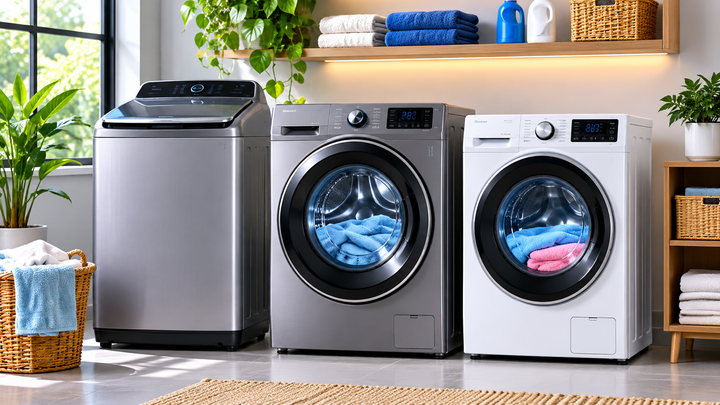
Best Washing Machines: Features, Types and Performance Explained
Washing machines have become an essential household appliance in modern homes.
They reduce the time and effort required for laundry while improving cleaning efficiency. Whether for a small family or a large household, selecting the right washing machine involves understanding capacity, washing performance, energy efficiency, and available features.
Consumers researching the best deal on washing machine options often consider more than the initial financial investment. Factors such as durability, water consumption, spin speed, maintenance requirements, and fabric care also influence the overall value of an appliance. This guide explores washing machine types, important features, performance factors, and considerations for evaluating different models.
Understanding Washing Machines
A washing machine is a household appliance designed to clean clothes, bedding, towels, and other washable fabrics using water, detergent, and mechanical movement.
Modern washing machines perform several functions automatically:
Washing
Rinsing
Spinning
Water management
Fabric care
The primary objective is to remove dirt, stains, and odors while protecting fabric quality.
Consumers evaluating different models often consider washing performance, drum capacity, spin speed, energy efficiency, and smart technology features.
Main Types of Washing Machines
Several washing machine categories are available, each designed for different household requirements.
Front Load Washing Machines
Front load washing machines have a door located on the front side of the appliance.
Key characteristics include:
Efficient water usage
Gentle fabric handling
High spin speeds
Effective stain removal
Multiple washing programs
These machines are often recognized for their cleaning performance and energy efficiency.
Top Load Washing Machines
Top load washing machines allow clothes to be loaded through an opening at the top.
Important characteristics include:
Easy loading and unloading
Convenient operation
Shorter wash cycles in many models
Accessible controls
Different washing technologies
Many households prefer top load machines because of their convenient loading arrangement.
Semi-Automatic Washing Machines
Semi-automatic models require some manual involvement during the washing process.
Features include:
Separate washing and spinning compartments
Greater manual control over water usage
Flexible operation
Independent washing and spinning functions
These machines are commonly used in households where water availability and manual control are important considerations.
Fully Automatic Washing Machines
Fully automatic washing machines complete the washing process with minimal user involvement.
Functions include:
Automatic water filling
Washing cycles
Rinsing cycles
Spinning operations
Program selection
These models are suitable for households seeking convenient laundry management.
Important Washing Machine Features
Understanding technical features helps consumers evaluate different appliances.
Drum Capacity
Capacity determines how much laundry can be washed during a single cycle.
Common capacity ranges include:
| Capacity | Typical Household Suitability |
|---|---|
| 6 kg | Individuals or couples |
| 7–8 kg | Small families |
| 9–10 kg | Medium to larger families |
| 11–12 kg | Larger households |
Selecting an appropriate capacity helps prevent overloading and supports effective cleaning.
Energy Efficiency
An energy-efficient washing machine consumes less electricity while maintaining cleaning performance.
Important advantages include:
Reduced electricity consumption
Improved energy management
Lower environmental impact
Efficient appliance operation
Energy labels can help consumers understand the relative efficiency of different models.
Spin Speed
Spin speed is measured in revolutions per minute (RPM).
Higher spin speeds generally extract more water from clothing, reducing the moisture remaining after washing.
Typical spin speeds range from approximately 800 RPM to 1400 RPM, depending on the appliance.
Smart Features
Modern smart washing machines may include:
Mobile application connectivity
Remote monitoring
Automatic cycle recommendations
Maintenance alerts
Connected home integration
These features provide additional control and convenience.
Wash Programs
Different fabrics require different cleaning methods.
Common washing programs include:
Cotton
Delicate fabrics
Wool
Sportswear
Quick wash
Heavy-duty cleaning
Bedding
Hygiene cycles
Specialized programs help improve fabric care and cleaning effectiveness.
How Washing Machines Work
A washing machine follows a structured cleaning process.
Step 1: Loading Laundry
Clothes are placed inside the drum according to the recommended capacity.
Proper loading helps maintain balanced operation and effective cleaning.
Step 2: Adding Detergent
Detergent is placed in the designated compartment.
The appliance releases detergent at the appropriate stage of the selected washing cycle.
Step 3: Water Intake
Water enters the drum according to the selected program.
Modern appliances regulate water levels based on load size and washing requirements.
Step 4: Washing Action
The drum rotates and moves clothing through water and detergent.
This mechanical action helps remove dirt and stains from fabrics.
Step 5: Rinsing
Clean water removes detergent residue from garments.
Multiple rinsing stages may be used depending on the selected program.
Step 6: Spinning
The drum rotates at higher speeds to extract excess water from clothing.
This helps reduce drying time.
Step 7: Cycle Completion
The appliance stops automatically after completing the selected program.
Clothes can then be removed for air drying or machine drying.
Benefits and Advantages
Modern washing machines provide several practical advantages.
Time Savings
Automated washing cycles allow users to manage laundry with minimal supervision.
Improved Cleaning Performance
Advanced drum technology and specialized washing programs help remove stains and clean different fabric types.
Water Efficiency
Modern appliances use optimized water management systems to regulate consumption.
Better Fabric Protection
Gentle drum movements and fabric-specific programs help maintain clothing quality.
Convenience and Automation
Features such as delayed start timers, smart controls, and automatic program selection simplify everyday laundry tasks.
Enhanced Hygiene
Some models include hygiene-focused programs designed to help remove allergens and maintain fabric cleanliness.
Understanding Washing Machine Prices
The prices of washing machines vary according to several technical and functional characteristics.
Understanding these differences helps consumers evaluate appliances based on their household requirements rather than relying on a single specification.
Main Factors Influencing Appliance Prices
| Factor | How It Influences Appliance Value |
|---|---|
| Drum Capacity | Larger capacity may involve additional manufacturing requirements |
| Machine Type | Front load and fully automatic models have different configurations |
| Energy Efficiency | Advanced energy management technology influences product specifications |
| Spin Speed | Higher-performance spinning systems may affect appliance positioning |
| Smart Features | Connectivity and automated controls add functionality |
| Build Quality | Materials and component durability influence long-term performance |
| Brand | Manufacturing reputation and product support influence market positioning |
Understanding Different Product Categories
Basic semi-automatic models generally have simpler operating systems and fewer automated functions.
Fully automatic models include integrated washing, rinsing, and spinning operations.
Front load models may include advanced drum technology, specialized wash programs, and additional fabric care features.
Smart washing machines may incorporate connected controls, automatic recommendations, and monitoring capabilities.
These differences explain why washing machine models can vary significantly in their overall market positioning.
Evaluating Overall Value
Consumers searching for the best price on washing machine models should also examine product specifications and long-term operating requirements.
Important considerations include:
Electricity consumption
Water requirements
Drum capacity
Warranty coverage
Maintenance requirements
Expected appliance lifespan
Available washing programs
Evaluating these factors provides a more complete understanding of appliance value than considering the initial amount alone.
Factors to Consider When Selecting a Washing Machine
Household Requirements
Consider the number of household members and the amount of laundry generated regularly.
Smaller households may require less capacity, while larger families may benefit from bigger drums.
Installation Space
Measure the available installation area before selecting an appliance.
Front load and top load machines may require different clearance arrangements.
Washing Performance
Examine washing programs, drum movement, temperature settings, and stain-removal capabilities.
Noise Levels
Some washing machines operate more quietly than others.
Noise reduction technology can be particularly useful in apartments and smaller homes.
Water Consumption
Water efficiency is an important consideration, especially in locations where water availability varies.
Maintenance Requirements
Regular maintenance helps maintain appliance performance.
Recommended activities include:
Cleaning detergent compartments
Inspecting filters
Wiping door seals
Cleaning the drum
Running maintenance cycles
Durability
Build quality influences long-term appliance reliability.
Materials, component quality, operating conditions, and maintenance practices can all affect durability.
Real-World Applications
Washing machines support different household and residential environments.
Small Apartments
Compact washing machines are suitable for homes with limited installation space.
Family Homes
Families often generate larger amounts of laundry and may benefit from higher-capacity appliances.
Student Housing
Easy-to-operate machines with practical washing programs can support regular laundry routines.
Vacation Properties
Properties used by multiple guests may require durable appliances capable of handling frequent washing cycles.
Multi-Generational Households
Larger households may benefit from machines with higher capacity and multiple fabric care programs.
Maintenance and Care Best Practices
Proper maintenance supports consistent washing performance and helps reduce unnecessary wear.
Clean the Drum Regularly
Run the recommended drum-cleaning program to remove detergent residue and accumulated deposits.
Inspect the Filters
Check and clean filters according to the manufacturer's maintenance instructions.
Maintain Door Seals
Wipe door seals to remove moisture and prevent residue accumulation.
Avoid Overloading
Follow the recommended load capacity to maintain balanced drum operation.
Use Appropriate Detergent
Select detergent suitable for the washing machine type and fabric requirements.
Maintain Proper Ventilation
Allow the drum and door area to dry when possible to reduce moisture accumulation.
Future Trends in Washing Machine Technology
Laundry appliance technology continues to evolve through automation, connectivity, and improved energy management.
Artificial Intelligence Integration
AI-powered washing machines can analyze laundry loads and recommend suitable washing settings.
Enhanced Energy Efficiency
Manufacturers continue developing appliances designed to reduce electricity and water consumption.
Smart Home Connectivity
Connected washing machines increasingly support integration with smart home platforms.
Advanced Fabric Care
Improved sensors and drum designs support more precise fabric treatment.
Predictive Maintenance
Future appliances may identify potential operating problems and provide maintenance notifications before performance is affected.
Frequently Asked Questions
1. What are the main types of washing machines?
The main categories include front load, top load, semi-automatic, and fully automatic washing machines.
2. What capacity is suitable for a small family?
A 7–8 kg washing machine is commonly suitable for a small family, depending on laundry habits and household requirements.
3. What factors influence the prices of washing machines?
Capacity, machine type, energy efficiency, spin speed, smart features, build quality, and brand positioning influence appliance prices.
4. How can consumers evaluate the best deal on washing machine models?
They should examine capacity, washing performance, energy consumption, warranty coverage, maintenance requirements, and overall appliance specifications.
5. How can someone identify the best price on washing machine models?
Reviewing similar models with comparable capacities and features helps consumers understand differences in market positioning and overall value.
6. Are front load washing machines more energy-efficient?
Many front load models use less water and may offer strong energy efficiency, although actual performance depends on the individual model and washing program.
7. What is the difference between semi-automatic and fully automatic machines?
Semi-automatic machines require some manual involvement, while fully automatic machines manage washing, rinsing, and spinning through integrated programs.
8. What spin speed is suitable for household laundry?
Spin speeds between approximately 800 and 1400 RPM are common. The appropriate setting depends on fabric type and drying requirements.
9. How often should a washing machine be cleaned?
Cleaning frequency depends on usage and manufacturer recommendations. Regular drum, filter, detergent compartment, and seal maintenance helps maintain performance.
10. Do smart washing machines provide additional convenience?
Yes. Features such as remote monitoring, connected controls, maintenance alerts, and automatic cycle recommendations can simplify laundry management.
Conclusion
The best washing machines combine effective cleaning performance, energy efficiency, convenient features, and reliable operation. Understanding washing machine types, drum capacity, spin speed, wash programs, and smart technology helps consumers evaluate different appliances more effectively.
Whether selecting a front load, top load, semi-automatic, or fully automatic washing machine, the right choice depends on household size, laundry habits, installation space, and operating requirements.
By examining product specifications, understanding the prices of washing machines, and considering long-term performance, consumers can make informed decisions and enjoy a more efficient laundry experience.