Direct Drive Servo Motors Explained: Precision Motion Control
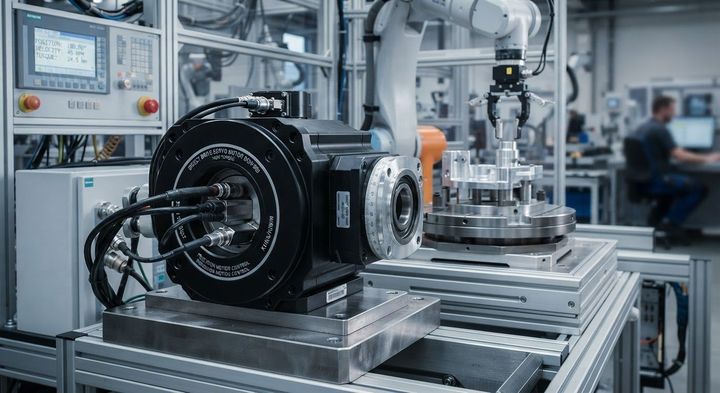
Direct drive servo motors are advanced motion control devices used in industrial automation, robotics, semiconductor manufacturing, CNC machinery, medical equipment, and precision production systems.
Unlike traditional motor systems that rely on gearboxes, belts, or mechanical transmissions, direct drive technology connects the motor directly to the load.
This design helps achieve precise positioning, smooth motion, and high responsiveness while reducing mechanical complexity. As modern manufacturing increasingly demands accuracy, efficiency, and intelligent automation, direct drive servo motors continue to play an important role in high-performance motion control applications.
Direct Drive Servo Motors at a Glance
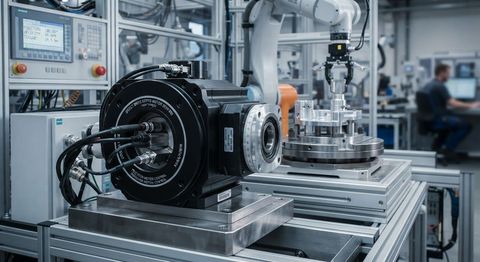
Direct drive servo motors generate motion without intermediate mechanical transmission components such as gears, pulleys, or belts. The motor shaft connects directly to the driven load, enabling highly accurate positioning and responsive motion control. These motors are widely used in industrial automation systems where precision, repeatability, and dynamic performance are important operational requirements.
Key Industry Facts
- Direct drive systems eliminate traditional mechanical transmission components.
- Servo motors are commonly used in industrial automation and robotics.
- High positioning accuracy supports precision manufacturing applications.
- Direct drive technology reduces backlash associated with gear systems.
- Many semiconductor production systems utilize direct drive motion control.
- Modern CNC machinery often incorporates advanced servo motor technology.
- Industrial robotics increasingly depend on precise motion control solutions.
How Direct Drive Servo Motors Work
A direct drive servo motor operates by coupling the motor directly to the load without additional transmission mechanisms.
Basic Operating Process
- A motion controller sends commands to the servo drive.
- The servo drive regulates electrical power supplied to the motor.
- The motor generates rotational or linear movement.
- Feedback devices continuously monitor position and speed.
- The controller adjusts performance based on feedback data.
- The system maintains precise positioning and motion control.
This closed-loop operation enables accurate and repeatable movement under varying operating conditions.
Main Types of Direct Drive Servo Motors
Rotary Direct Drive Motors
Rotary direct drive motors produce rotational movement and are widely used in automation systems, indexing tables, and precision manufacturing equipment.
Common applications include:
- CNC rotary tables
- Robotic joints
- Semiconductor processing
- Packaging equipment
- Inspection systems
Linear Direct Drive Motors
Linear servo motors generate movement in a straight line without mechanical conversion mechanisms.
Typical applications include:
- Semiconductor equipment
- Precision positioning systems
- Industrial automation machinery
- High-speed transport systems
- Electronics manufacturing
Torque Motors
Torque motors are specialized direct drive motors designed to generate high torque at relatively low rotational speeds.
They are commonly used in:
- Rotary indexing systems
- Industrial automation equipment
- Precision manufacturing machinery
- Machine tool applications
Comparison of Motion Control Technologies
| Technology | Transmission System | Precision | Maintenance |
|---|---|---|---|
| Direct Drive Servo | Direct Coupling | Very High | Lower |
| Belt Drive System | Belt & Pulley | Moderate | Moderate |
| Gear Drive System | Gearbox | High | Higher |
| Chain Drive System | Chain Mechanism | Moderate | Higher |
Core Components of Direct Drive Servo Systems
Servo Motor
The motor serves as the primary motion-generating component within the system.
Servo Drive
The servo drive regulates power delivery and controls motor performance based on operational commands.
Encoder
Encoders provide precise feedback regarding:
- Position
- Speed
- Direction
- Motion status
Motion Controller
The controller coordinates movement, positioning, acceleration, and system synchronization.
Feedback System
Continuous feedback helps maintain accuracy and operational consistency.
Applications of Direct Drive Servo Motors
Industrial Automation
Manufacturing facilities use direct drive systems for accurate positioning and automated production operations.
Robotics
Industrial robots depend on precise motion control for assembly, material handling, welding, and inspection processes.
CNC Machinery
Direct drive technology supports accurate machining and positioning operations in advanced CNC equipment.
Semiconductor Manufacturing
Semiconductor production environments require precise and repeatable movement for wafer processing and inspection systems.
Medical Equipment
Certain medical manufacturing and diagnostic systems utilize direct drive motors for controlled positioning applications.
Packaging Machinery
High-speed packaging equipment often uses servo motion control to coordinate production activities.
Selection Factors
Choosing a direct drive servo motor requires evaluation of several important factors.
Torque Requirements
The motor should provide sufficient torque for the intended load.
Speed Requirements
Operating speed should align with application demands.
Positioning Accuracy
Applications requiring high precision may need advanced encoder technology.
Environmental Conditions
Temperature, vibration, dust, and humidity can influence equipment selection.
Load Characteristics
The weight and inertia of the load affect motor sizing requirements.
Integration Requirements
Compatibility with automation systems and industrial communication networks should be considered.
Benefits of Direct Drive Servo Motors
- High positioning accuracy
- Reduced mechanical complexity
- Lower backlash
- Improved motion responsiveness
- Enhanced repeatability
- Reduced wear on transmission components
- Smooth motion control
- High dynamic performance
- Improved automation integration
- Suitable for precision manufacturing
- Supports advanced robotics applications
- Simplified mechanical design
Challenges and Limitations
Higher Initial Investment
Direct drive systems may require specialized components and control technologies.
Precision Installation Requirements
Proper alignment is important for optimal performance.
Advanced Control Requirements
High-performance applications often require sophisticated motion control systems.
Thermal Management
Certain applications may require effective heat management strategies.
Application-Specific Design
Motor selection and system configuration should match operational requirements.
Industry Standards and Compliance
Industrial servo motor systems often operate within established engineering and safety frameworks.
Common considerations include:
- Electrical safety requirements
- Industrial automation standards
- Motion control specifications
- Equipment reliability guidelines
- Manufacturing quality requirements
- Machine safety integration
Specific standards vary according to industry, region, and application.
Safety Considerations
Safe operation is an important aspect of motion control systems.
Important practices include:
- Emergency stop integration
- Protective guarding
- Routine inspections
- Proper system configuration
- Electrical safety procedures
- Operator training
- Safe maintenance practices
- Monitoring of operating conditions
Safety measures should be tailored to the specific equipment and application.
Latest Technology Trends
Smart Motion Control
Advanced controllers provide improved synchronization and positioning capabilities.
Industrial Automation Integration
Direct drive motors are increasingly connected to intelligent manufacturing systems.
Predictive Maintenance
Sensors and analytics help monitor equipment condition and performance.
Digital Monitoring
Real-time operational data supports maintenance and optimization activities.
High-Resolution Feedback Systems
Modern encoders provide increasingly accurate position information.
Expert Insights
Direct drive servo motors have become an important technology for applications requiring precision, responsiveness, and reduced mechanical complexity. By eliminating intermediate transmission components, these systems support highly accurate motion control while simplifying mechanical design. As industrial automation and smart manufacturing continue evolving, direct drive solutions are expected to remain central to next-generation motion control systems.
Key Takeaways
- Direct drive servo motors connect directly to the load.
- They eliminate belts, gears, and other transmission components.
- High positioning accuracy supports precision manufacturing.
- Industrial robotics frequently utilize direct drive technology.
- Feedback systems enable accurate closed-loop control.
- Direct drive systems reduce backlash and mechanical wear.
- Smart monitoring and predictive maintenance are growing trends.
- Motion control technology continues advancing across industries.
Frequently Asked Questions
What is a direct drive servo motor?
A direct drive servo motor connects directly to the driven load without using gears, belts, or other transmission mechanisms.
How does a direct drive servo motor work?
The motor receives commands from a controller and uses feedback devices to maintain precise position and speed control.
What industries use direct drive servo motors?
Industrial automation, robotics, semiconductor manufacturing, CNC machining, medical equipment, and packaging industries commonly use them.
What are the advantages of direct drive technology?
Benefits include high accuracy, reduced backlash, simplified mechanical systems, and improved motion responsiveness.
What is a servo encoder?
A servo encoder is a feedback device that measures position, speed, and movement for accurate motion control.
Are direct drive motors suitable for robotics?
Yes. Many robotic systems rely on direct drive technology for precise movement and positioning.
What is the difference between direct drive and gear-driven systems?
Direct drive systems eliminate transmission components, while gear-driven systems use mechanical gearboxes to transfer motion.
Why is feedback important in servo systems?
Feedback allows the controller to continuously adjust motor performance and maintain precise positioning.
What is predictive maintenance?
Predictive maintenance uses monitoring technology and data analysis to identify potential equipment issues before failures occur.
Can direct drive motors support smart manufacturing?
Yes. Modern direct drive systems often integrate with industrial automation, monitoring platforms, and intelligent manufacturing environments.
Conclusion
Direct drive servo motors represent an advanced approach to precision motion control by eliminating traditional transmission mechanisms and connecting the motor directly to the load. Their ability to deliver accurate positioning, rapid response, and reliable performance makes them valuable across industrial automation, robotics, semiconductor production, CNC machinery, and other high-precision applications.
As manufacturing environments continue adopting intelligent automation, predictive maintenance, and connected industrial systems, direct drive servo motors are expected to play an increasingly important role in achieving efficient and highly controlled motion performance.