Digital Twin Engineering Simulation Tools: Essential Technologies Overview
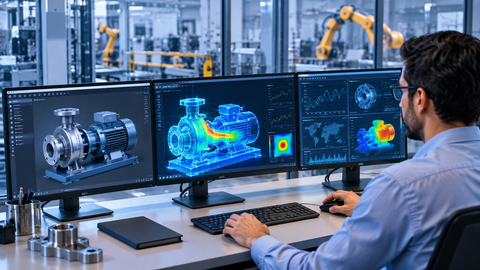
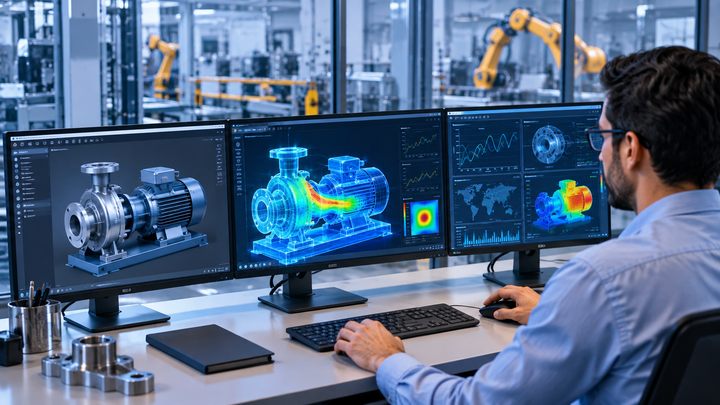
Digital twin engineering simulation tools are transforming how engineers design, test, monitor, and optimize physical systems.
These technologies create virtual representations of machines, products, facilities, or entire operations, allowing organizations to analyze performance in a digital environment before making real-world changes.
Unlike traditional simulation models, digital twins continuously integrate data from physical assets through sensors, connected devices, and monitoring systems. This enables engineers to compare real-world performance with virtual models and make more informed decisions.
As Industry 4.0, industrial automation, smart manufacturing, and intelligent infrastructure continue to evolve, digital twin engineering simulation tools are becoming increasingly important across manufacturing, energy, aerospace, healthcare, transportation, and construction sectors.
Quick Facts Table
| Topic | Purpose | Key Components | Main Benefits | Common Applications |
|---|---|---|---|---|
| Digital Twin Engineering Simulation Tools | Create virtual models of physical assets and systems | Simulation engines, IoT connectivity, analytics, visualization, AI models | Better decision-making, predictive maintenance, operational optimization | Manufacturing, aerospace, energy, healthcare, construction, transportation |
What Is Digital Twin Engineering Simulation?
Digital twin engineering simulation is the process of creating a virtual model that mirrors the behavior, performance, and condition of a real-world object, machine, process, or system.
The digital twin receives information from sensors, operational databases, and connected equipment. This data helps maintain an up-to-date virtual representation that can be analyzed, tested, and optimized without affecting physical operations.
Why Digital Twin Engineering Simulation Matters
Modern organizations generate large amounts of operational data. Digital twin technologies transform this information into actionable insights by creating dynamic virtual environments where scenarios can be tested safely.
These technologies support:
- Predictive maintenance
- Equipment performance analysis
- Design validation
- Process optimization
- Asset lifecycle management
- Energy efficiency improvements
- Risk reduction
- Operational planning
Digital Twin Engineering Facts
- Digital twins combine real-time data with virtual models.
- Engineering simulation improves product and system validation.
- Artificial intelligence enhances predictive capabilities.
- Cloud platforms simplify large-scale deployment.
- Industrial automation increasingly relies on digital twin technologies.
- Real-time monitoring improves operational visibility.
- Simulation-driven engineering supports faster innovation cycles.
Understanding the Concept
A digital twin acts as a virtual counterpart of a physical system. The virtual model continuously receives operational data and updates its condition based on real-world behavior.
Engineers use this virtual environment to simulate different operating conditions, predict future outcomes, evaluate system performance, and identify potential issues before they occur.
The combination of simulation, analytics, artificial intelligence, and sensor connectivity makes digital twins significantly more powerful than traditional static models.
Major Digital Twin Engineering Simulation Tools
- Siemens Xcelerator
- Ansys Twin Builder
- NVIDIA Omniverse
- Dassault 3DEXPERIENCE
- Bentley iTwin
- Azure Digital Twins
- AWS IoT TwinMaker
- PTC ThingWorx
- AnyLogic
- MATLAB Simulink
- Unity 3D
- FlexSim
- Tecnomatix
- Modelica Platforms
- COMSOL Multiphysics
These platforms support various aspects of modeling, simulation, visualization, analytics, and operations management.
Digital Twin Tools Categories Table
| Tool Category | Examples |
|---|---|
| Engineering Simulation | Ansys Twin Builder, COMSOL, Simulink |
| Product Lifecycle Platforms | Siemens Xcelerator, Dassault 3DEXPERIENCE |
| Industrial IoT Platforms | Azure Digital Twins, AWS IoT TwinMaker |
| Infrastructure Twins | Bentley iTwin |
| Industrial Operations Platforms | PTC ThingWorx, AVEVA |
| Visualization Platforms | NVIDIA Omniverse, Unity 3D |
| Manufacturing Simulation | Tecnomatix, FlexSim, AnyLogic |
Key Features and Core Components
Modern digital twin engineering tools typically include:
- 3D modeling capabilities
- Real-time data integration
- Sensor connectivity
- Simulation engines
- Artificial intelligence analytics
- Machine learning models
- Visualization environments
- Cloud connectivity
- Predictive maintenance capabilities
- Asset performance monitoring
- Process optimization tools
- Digital workflow management
Types of Digital Twins
Product Digital Twins
These digital twins represent individual products and are used throughout design, testing, manufacturing, and operational stages.
Process Digital Twins
Process twins simulate workflows, manufacturing operations, and industrial procedures to improve efficiency.
System Digital Twins
System twins model complex interactions among multiple assets, equipment, and operational processes.
Infrastructure Digital Twins
Infrastructure twins represent buildings, factories, power systems, transportation networks, and large facilities.
Digital Twin Platforms Comparison
| Platform Type | Primary Focus | Typical Use Case |
|---|---|---|
| Engineering Twin | Physics Simulation | Product Development |
| Operations Twin | Asset Monitoring | Industrial Operations |
| Infrastructure Twin | Facility Management | Buildings and Utilities |
| Manufacturing Twin | Production Optimization | Smart Factories |
| Enterprise Twin | System Visibility | Large Organizations |
How Digital Twin Engineering Simulation Works
- Physical assets are equipped with sensors and monitoring devices.
- Data is collected continuously from operational systems.
- Information is transmitted to digital twin platforms.
- Simulation models replicate physical behavior.
- Analytics engines evaluate performance and conditions.
- Engineers test scenarios within the virtual environment.
- Insights help improve operations and decision-making.
This continuous feedback loop allows organizations to optimize performance while reducing uncertainty.
Engineering Simulation Techniques
Digital twin development commonly uses several simulation approaches:
Finite Element Analysis (FEA)
Used for structural and mechanical analysis.
Computational Fluid Dynamics (CFD)
Used to study fluid flow, heat transfer, and aerodynamics.
Discrete Event Simulation
Used to model manufacturing processes and operational workflows.
Multi-Body Dynamics
Used for motion analysis and mechanical systems.
Monte Carlo Simulation
Used for uncertainty analysis and risk evaluation.
Agent-Based Modeling
Used to simulate interactions between multiple entities within a system.
Industry Applications
Manufacturing
Manufacturers use digital twins to improve production efficiency and equipment performance.
Aerospace
Aircraft systems are modeled and tested virtually before deployment.
Energy and Utilities
Power generation facilities utilize digital twins for asset monitoring and predictive maintenance.
Healthcare
Medical devices and healthcare operations can be simulated and optimized.
Construction
Building information models are enhanced through digital twin technologies.
Transportation
Railways, airports, and logistics networks use digital twins to improve operations.
Smart Cities
Urban infrastructure can be monitored and optimized using interconnected digital models.
Real-World Examples
Smart Factory Operations
A manufacturing facility creates a digital twin of its production line to identify bottlenecks and improve efficiency.
Power Plant Monitoring
An energy facility uses a digital twin to monitor turbine performance and predict maintenance requirements.
Infrastructure Management
A transportation authority develops a digital twin of a bridge to monitor structural conditions and optimize maintenance planning.
Aerospace Engineering
Aircraft manufacturers use digital twins to test performance under various operating conditions before deployment.
Benefits and Advantages
- Improved operational visibility
- Better asset performance
- Enhanced predictive maintenance
- Reduced downtime
- More accurate forecasting
- Faster engineering validation
- Improved resource utilization
- Better lifecycle management
- Enhanced decision-making
- Reduced operational risks
- Improved engineering efficiency
- Support for smart manufacturing
Automation and Artificial Intelligence
Artificial intelligence is increasingly integrated into digital twin platforms.
Predictive Analytics
AI identifies patterns and predicts future equipment behavior.
Machine Learning Models
Machine learning continuously improves simulation accuracy.
Automated Optimization
Algorithms recommend operational improvements automatically.
Intelligent Monitoring
Real-time analytics help identify abnormal conditions faster.
Important Factors to Consider
When evaluating digital twin engineering simulation tools, organizations should consider:
- Simulation accuracy
- Scalability
- Integration capabilities
- Data quality
- Visualization requirements
- Industry-specific needs
- Security requirements
- Cloud compatibility
- Analytics functionality
- Operational objectives
Common Challenges and Solutions
| Challenge | Impact | Solution |
|---|---|---|
| Data Quality Issues | Inaccurate Models | Improved Data Validation |
| Complex Integration | Deployment Delays | Standardized Connectivity |
| Large Data Volumes | Processing Challenges | Cloud Infrastructure |
| Model Accuracy | Reduced Reliability | Continuous Calibration |
| Cybersecurity Risks | Operational Exposure | Security Frameworks |
Digital Twin Best Practices
- Define clear operational objectives.
- Start with a focused use case.
- Ensure reliable sensor connectivity.
- Maintain high-quality operational data.
- Update models regularly.
- Validate simulation results continuously.
- Strengthen cybersecurity measures.
- Monitor performance metrics consistently.
- Integrate analytics capabilities.
- Support workforce training initiatives.
Future Trends and Industry Insights
AI-Powered Digital Twins
Artificial intelligence will continue improving prediction accuracy and automation.
Physical AI Integration
Digital twins are increasingly used to train intelligent systems and robotics.
Digital Twin Ecosystems
Organizations are creating connected networks of digital twins across operations.
Advanced Visualization
Immersive environments and real-time 3D visualization are becoming more common.
Cloud-Native Engineering Platforms
Cloud infrastructure continues simplifying deployment and scalability.
Autonomous Operations
Future digital twins may support greater levels of automated decision-making.
Expert Insights
Digital twin engineering simulation tools are evolving beyond simple visualization platforms into comprehensive decision-support environments. Modern solutions combine engineering simulation, IoT connectivity, machine learning, analytics, and real-time monitoring to create living digital representations of physical systems.
As organizations continue adopting Industry 4.0 technologies, digital twins are expected to become a central component of engineering, manufacturing, infrastructure management, and operational optimization strategies.
Key Takeaways
- Digital twins create virtual representations of physical systems.
- Real-time data keeps digital models synchronized.
- Engineering simulation improves decision-making.
- Artificial intelligence enhances predictive capabilities.
- Multiple categories of digital twin tools exist.
- Manufacturing, energy, and infrastructure sectors are major adopters.
- Predictive maintenance is a key use case.
- Future systems will become increasingly intelligent and connected.
Frequently Asked Questions (FAQ)
What is a digital twin?
A digital twin is a virtual representation of a physical asset, process, or system that remains connected to operational data.
What are digital twin engineering simulation tools?
They are platforms used to model, simulate, monitor, and optimize physical systems through virtual environments.
How does a digital twin work?
It combines real-world data, simulation models, and analytics to mirror physical system behavior.
What industries use digital twins?
Manufacturing, aerospace, energy, healthcare, construction, transportation, and smart city projects.
What is Ansys Twin Builder?
An engineering-focused platform used for physics-based digital twin development and simulation.
What is Azure Digital Twins?
A cloud platform used for creating connected digital models of environments and assets.
What is NVIDIA Omniverse?
A visualization and simulation platform supporting advanced digital twin environments.
What is predictive maintenance?
A maintenance approach that uses data and analytics to identify potential failures before they occur.
How does AI improve digital twins?
AI enhances forecasting, anomaly detection, optimization, and decision-making.
What is a process digital twin?
A virtual model representing operational workflows and business processes.
What is a system digital twin?
A model that represents multiple interconnected assets and systems.
What is CFD simulation?
Computational Fluid Dynamics is used to analyze fluid flow and thermal behavior.
What is FEA simulation?
Finite Element Analysis evaluates structural performance and mechanical behavior.
What are infrastructure digital twins?
Digital models representing buildings, utilities, transportation systems, and other infrastructure assets.
Why are digital twins important for Industry 4.0?
They support automation, analytics, predictive maintenance, and intelligent decision-making.
Conclusion
Digital twin engineering simulation tools are reshaping how organizations design, monitor, and optimize physical systems. By combining simulation technologies, real-time data, artificial intelligence, and advanced analytics, these platforms create highly accurate virtual environments that improve operational visibility and decision-making.
As Industry 4.0 technologies continue to advance, digital twins will play an increasingly important role across manufacturing, infrastructure, energy, healthcare, aerospace, and transportation sectors. Understanding these technologies provides valuable insight into the future of engineering simulation, intelligent operations, and connected industrial ecosystems.