Fleet GPS Tracking Systems Guide: Features, Telematics and Safety
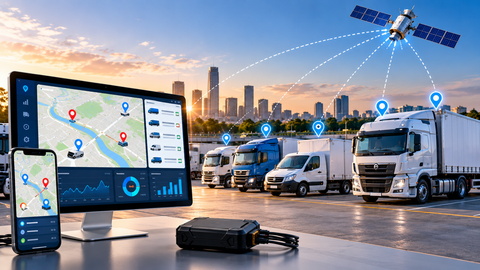
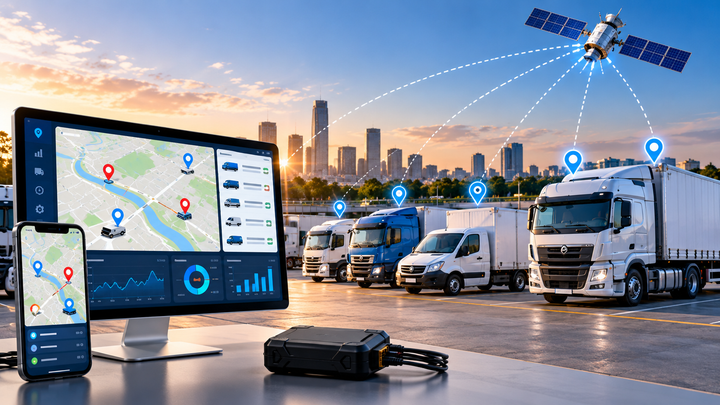
Fleet GPS tracking systems use satellite positioning, wireless communications, and vehicle data to help organizations monitor fleet locations, review vehicle activity, coordinate routes, and improve operational visibility.
Modern fleet telematics extends tracking by collecting information about engine performance, fuel consumption, driver behavior, maintenance needs, and vehicle safety.
These technologies support commercial transportation, logistics, construction, utilities, and field operations. Their effectiveness depends on device capabilities, network coverage, data quality, privacy safeguards, and how fleet managers use the information.
Quick Facts About Fleet GPS Tracking Systems
Feature | Description |
|---|---|
Primary purpose | Monitor vehicle location and fleet activity |
Core technology | Global Positioning System and wireless data transmission |
Main equipment | GPS tracking devices, vehicle interfaces, antennas, sensors |
Data transmission | Cellular networks or other supported communication methods |
Common tracking modes | Live tracking, periodic updates, historical tracking |
Advanced capability | Vehicle telematics and driver behavior monitoring |
Safety applications | Driving-event alerts, route visibility, video telematics |
Maintenance applications | Engine diagnostics, mileage tracking, fault alerts |
Common industries | Transportation, logistics, construction, utilities |
Important considerations | Coverage, privacy, data security, compatibility |
What Are Fleet GPS Tracking Systems?
Fleet GPS tracking systems combine location-detection devices with communication networks and a fleet management interface. They allow authorized users to view vehicle positions, examine previous journeys, establish geographic boundaries, and receive notifications about selected events.
Basic systems focus on vehicle location and movement. Advanced fleet tracking systems may also collect engine data, fuel information, odometer readings, diagnostic trouble codes, and driving-event information through onboard vehicle connections or additional sensors.
A GPS tracker identifies a vehicle's position, but the wider telematics system turns location and vehicle data into information that supports operational decisions. The capabilities available depend on the device, vehicle, communications network, and selected configuration.
Why Fleet GPS Tracking Matters
Fleet operators often coordinate vehicles across multiple routes, sites, and operating schedules. Without consistent tracking information, managers may have limited visibility into vehicle availability, route progress, unexpected stops, or developing maintenance problems.
Fleet GPS tracking provides a shared view of fleet activity that can support planning and accountability.
Fleet visibility: Review vehicle locations and recent movements.
Route coordination: Identify delays, route deviations, and vehicle availability.
Driver safety: Review selected driving events and support targeted coaching.
Maintenance planning: Use mileage, engine information, and fault data to identify maintenance needs.
Asset protection: Monitor unauthorized movement and unexpected use.
Operational reporting: Analyze utilization, idle time, journey history, and fleet activity.
Regulatory support: Integrate relevant records where the system meets applicable requirements.
Tracking technology does not automatically improve performance. Results depend on accurate data, sensible operating procedures, appropriate training, and responsible use of monitoring information.
Understanding Fleet GPS Tracking and Telematics
Simple Explanation
A GPS tracking device receives signals from navigation satellites and calculates its position. It then sends location information through a supported communications network to a fleet management platform, where authorized users can view the vehicle on a map.
Telematics adds information from the vehicle itself. Depending on the installation, this may include engine status, mileage, fuel-related data, diagnostic codes, and driving events. Combining these data sources helps managers understand not only where a vehicle is but also how it is operating.
GPS Tracking Versus Vehicle Telematics
GPS tracking primarily answers location-related questions: where a vehicle is, where it has travelled, and whether it has entered a defined area. Vehicle telematics combines location with additional operational information.
For example, a location alert may indicate that a truck has stopped unexpectedly. Telematics data might help determine whether the engine is running, a diagnostic fault has occurred, or an unusual driving event preceded the stop. The availability and accuracy of these details vary by vehicle and device.
How Fleet GPS Tracking Systems Work
Step 1: Determine the Vehicle's Position
The tracking device receives signals from multiple navigation satellites and uses them to estimate its location. The Global Positioning System is one satellite navigation constellation; compatible devices may also support other global or regional navigation systems.
Position accuracy can be affected by buildings, tunnels, dense vegetation, atmospheric conditions, antenna placement, and other obstructions.
Step 2: Collect Vehicle Information
The device may collect speed, movement, ignition status, mileage, or other available data. Advanced vehicle telematics systems can obtain additional information through an onboard diagnostics connection, a vehicle data bus, or external sensors.
The precise information available depends on the vehicle's electronic architecture and the permissions and interfaces supported by the tracking equipment.
Step 3: Transmit Data
The device sends collected information through a cellular connection or another supported communication method. Some devices store information locally when connectivity is unavailable and transmit it later, while others provide limited updates during network interruptions.
Satellite communications may support selected remote operations where cellular coverage is inadequate, provided the equipment is designed for that purpose.
Step 4: Process and Display Information
The fleet management platform organizes incoming records into maps, journey histories, dashboards, reports, and alerts. Depending on the configuration, managers may view individual vehicles, groups, operating regions, or selected performance indicators.
Step 5: Generate Alerts and Reports
Rules can trigger notifications when a vehicle enters a restricted zone, exceeds a configured speed threshold, remains idle beyond a defined interval, or reports a diagnostic event. Alerts are useful only when thresholds are appropriate and someone is responsible for reviewing and acting on them.
Step 6: Use the Data to Improve Operations
Fleet managers can compare routes, review utilization, investigate unusual events, plan maintenance, and discuss driving patterns with employees. Reliable decisions require context: a delayed vehicle, for example, may reflect congestion, weather, a delivery restriction, or a genuine operational problem.
Fleet GPS Tracking Workflow Table
Stage | Technology or Process | Main Outcome |
|---|---|---|
Positioning | Satellite navigation receiver | Estimated vehicle location |
Data collection | Tracking device and vehicle interfaces | Location and activity records |
Communication | Cellular or supported alternative network | Data transmission |
Processing | Fleet management platform | Organized vehicle information |
Visualization | Maps and dashboards | Fleet-wide visibility |
Notification | Configured alerts | Awareness of selected events |
Analysis | Reports and performance review | Better-informed decisions |
Action | Dispatch, coaching, or maintenance planning | Operational follow-through |
Fleet GPS Tracking System Architecture
GPS Tracking Device
The tracking device receives satellite signals, records position data, and may collect other vehicle information. Units can be permanently installed, connected through a diagnostic port, or designed for portable asset tracking.
Vehicle Interface and Sensors
Vehicle interfaces can provide data such as ignition status, engine information, odometer readings, and diagnostic codes. Additional sensors may monitor doors, cargo temperature, trailer movement, or equipment operating conditions.
Communication Network
The communication network transmits data between the vehicle and the fleet platform. Cellular coverage, roaming arrangements, data transmission intervals, and remote-area connectivity affect the frequency and reliability of updates.
Fleet Management Platform
The platform presents location data, journey histories, vehicle status, alerts, and reports. More advanced configurations combine tracking with dispatch planning, maintenance records, fuel analysis, driver safety, and other fleet management functions.
Maps, Dashboards, and Reports
These interfaces translate raw data into information managers can interpret. Useful displays include vehicle status, route history, geofence events, utilization, diagnostic alerts, and driving-event summaries.
Security and Access Controls
Authentication, role-based permissions, secure communication, audit records, and controlled data retention help protect fleet information. Organizations should establish who can view location records and how long different categories of data are retained.
Main Components of Fleet GPS Tracking Systems
Component | Primary Function | Key Consideration |
|---|---|---|
GPS receiver | Determines geographic position | Satellite visibility and antenna placement |
Tracking unit | Collects and records vehicle data | Device capabilities and durability |
Vehicle interface | Retrieves supported vehicle information | Compatibility with vehicle electronics |
External sensors | Monitor selected conditions | Sensor suitability and calibration |
Communication module | Transmits information | Network coverage and connectivity |
Fleet management platform | Organizes tracking and telematics data | Features, usability, and integration |
Alert engine | Identifies configured events | Appropriate thresholds |
Reporting tools | Summarize fleet activity | Data accuracy and report relevance |
Security controls | Protect access and records | Permissions, encryption, and retention |
Types of Fleet GPS Tracking Systems
Fleet tracking solutions can be classified by their installation method, communication design, and monitoring capabilities. These categories can overlap: a hardwired tracker, for example, may also support advanced telematics and video monitoring.
Hardwired GPS Tracking Devices
Hardwired devices connect to a vehicle's electrical system and may integrate with supported vehicle electronics. They are commonly used for long-term fleet monitoring because they can remain installed during normal vehicle operation.
Advantages:
Permanent installation for regular fleet use.
Support for ignition and selected vehicle data.
Reduced dependence on routine battery replacement.
Considerations include installation requirements, vehicle compatibility, electrical protection, and maintenance access.
Plug-In GPS Trackers
Plug-in trackers connect to a compatible diagnostic port, often the onboard diagnostics connector. Depending on the device and vehicle, they may provide location information alongside mileage, ignition status, and selected diagnostic data.
Advantages:
Generally straightforward installation.
Convenient deployment across compatible vehicles.
Potential access to vehicle diagnostic information.
Compatibility, physical access, device security, and supported vehicle protocols should be checked before deployment.
Battery-Powered GPS Trackers
Battery-powered trackers are often used for trailers, containers, equipment, and other assets that lack a convenient permanent power connection. Their location-reporting frequency and battery life depend on battery capacity, environmental conditions, network availability, and device configuration.
Advantages:
Portable installation.
Suitable for selected unpowered assets.
Flexible deployment across different locations.
They may provide less frequent updates than continuously powered devices, particularly when configured to conserve battery energy.
Advanced Fleet Telematics Systems
Advanced telematics systems combine GPS positioning with vehicle diagnostics, driving-event detection, maintenance indicators, and fleet performance reporting. They are suitable for fleets that need more than basic location visibility.
Advantages:
Combined location and vehicle-performance data.
Support for maintenance and safety analysis.
Broader operational reporting capabilities.
The depth of information varies by vehicle, tracker, sensor configuration, and platform.
Video Telematics Systems
Video telematics combines vehicle data with camera footage and, in some configurations, artificial intelligence-based event detection. Cameras may face the road, the driver, or both, depending on the system and monitoring policy.
Advantages:
Visual context for selected driving events.
Support for structured driver coaching.
Additional information for incident investigation.
Video monitoring raises privacy, data retention, access, and workplace monitoring considerations that must be addressed before implementation.
Fleet GPS Tracking Type Comparison
System Type | Installation | Main Strength | Main Limitation |
|---|---|---|---|
Hardwired tracker | Vehicle electrical system | Long-term monitoring | Installation and vehicle compatibility |
Plug-in tracker | Compatible diagnostic port | Convenient deployment | Port and protocol limitations |
Battery-powered tracker | Portable mounting | Flexible asset monitoring | Battery and update-frequency constraints |
Advanced telematics | Installed device and supported interfaces | Location plus vehicle data | Greater configuration complexity |
Video telematics | Cameras plus tracking equipment | Visual context for driving events | Privacy and storage requirements |
Key Features of Fleet GPS Tracking Systems
Real-Time GPS Vehicle Tracking
Real-time fleet tracking provides frequent location updates so managers can review vehicle positions and movements. The term "real-time" should be interpreted in relation to the device's reporting interval and communication conditions; it does not necessarily mean uninterrupted, second-by-second positioning.
Useful capabilities include current or most recently reported locations, movement status, map views, journey history, and timestamps indicating when information was last received.
Geofencing and Location Alerts
Geofencing creates a virtual boundary around a geographic area. A system can notify authorized users when a tracked vehicle enters or leaves that area, depending on its configuration.
Common uses include monitoring depot arrivals, identifying departures from approved operating zones, and reviewing activity at designated sites. Geofence alerts depend on positioning accuracy, boundary settings, and reporting frequency.
Route History and Route Analysis
Route history reconstructs a vehicle's recorded movements over a selected period. Managers can compare actual journeys with planned routes, investigate unexplained stops, and identify recurring delays.
Historical tracks represent the locations recorded by the device rather than every movement continuously. Reporting intervals, connectivity gaps, and map-matching methods can affect how a route appears.
Driver Behavior Monitoring
Some fleet telematics systems identify events such as harsh braking, rapid acceleration, sharp cornering, or speeding relative to a configured threshold. These indicators can help managers identify patterns that merit review.
A detected event is not necessarily proof of unsafe driving. Road conditions, traffic, vehicle characteristics, and sensor calibration should be considered before drawing conclusions.
Fuel and Idling Analysis
Depending on vehicle compatibility, systems can estimate or collect fuel-related information and measure engine idling. Managers can use these records to identify unusual patterns, compare operating practices, and review avoidable engine runtime.
Fuel information may come from vehicle data, dedicated sensors, or calculations. The measurement method matters because estimates are not always equivalent to direct fuel measurements.
Vehicle Diagnostics and Maintenance Alerts
Telematics can collect supported diagnostic trouble codes, mileage readings, engine hours, and other maintenance indicators. Fleet managers can use this information alongside inspection records and manufacturer maintenance schedules to prioritize attention.
A diagnostic alert is an indication that further assessment may be necessary, not a definitive diagnosis of every underlying mechanical problem.
Fleet Reporting and Analytics
Reporting tools summarize location history, vehicle utilization, idle time, driving events, maintenance indicators, and other recorded activity. Good reports help answer specific operational questions rather than presenting large volumes of data without context.
Asset and Trailer Tracking
Asset tracking can monitor trailers, containers, generators, construction equipment, and other mobile assets. Depending on the hardware, it may use GPS positioning, cellular communication, satellite connectivity, or other location technologies.
Asset trackers often prioritize movement alerts, last-known location, battery condition, and recovery support rather than detailed engine information.
Fleet GPS Tracking Requirements and Integration
Vehicle Compatibility
Confirm whether the tracker supports the fleet's vehicle makes, models, electrical systems, and onboard communication protocols. Mixed fleets may require different devices or integration methods.
Network Coverage
Evaluate cellular coverage across regular routes, depots, border crossings, rural areas, and remote operating locations. A device that works reliably in a city may experience gaps in an isolated region.
Update Frequency and Data Quality
Frequent updates can improve location visibility but may increase data transmission and battery consumption. Reporting intervals should reflect operational requirements, the device's capabilities, and the importance of timely alerts.
Integration with Fleet Operations
Consider whether tracking data needs to work with dispatch planning, maintenance records, fuel monitoring, electronic logging devices, or existing fleet management systems. Integration should preserve data accuracy and clearly define which system holds the authoritative record for each purpose.
Data Security and Privacy
Establish access permissions, authentication controls, retention periods, and procedures for handling personal information. Explain the monitoring purpose to drivers and distinguish business-related tracking from any permitted private use of vehicles.
Installation and Ongoing Support
Plan installation, device testing, staff training, fault reporting, and equipment replacement. Reliable deployment depends on more than activating a tracking account; each device should be checked to confirm that location and required vehicle data are being recorded correctly.
Fleet GPS Tracking Systems vs. ELDs and Basic GPS Trackers
GPS tracking systems, electronic logging devices, and basic GPS trackers can share hardware or data, but they do not perform identical functions.
Feature | Fleet GPS Tracking | Electronic Logging Device | Basic GPS Tracker |
|---|---|---|---|
Primary purpose | Fleet location and operational visibility | Record required driving-duty information under applicable rules | Determine and report location |
Location history | Common feature | May record location for required functions | Depends on device |
Vehicle diagnostics | Available on compatible systems | Not a universal requirement | Usually limited |
Driver duty records | May integrate with separate records | Core regulatory function where mandated | Not normally included |
Safety analytics | Available in advanced configurations | Depends on additional capabilities | Usually limited |
Compliance role | Supports selected operational tasks | Must meet applicable ELD requirements when mandated | Not a substitute for required compliance equipment |
In the United States, an ELD must meet the applicable federal requirements when a commercial driver is subject to the ELD rule. A GPS tracker alone does not satisfy those requirements simply because it records location or distance.
Benefits and Advantages of Fleet GPS Tracking
Improved Operational Visibility
Managers can review vehicle positions and activity across a fleet without relying entirely on phone calls or manual updates. This can make it easier to coordinate dispatch decisions and investigate unexpected delays.
Better Route Planning
Historical journey data helps reveal recurring congestion, inefficient routing, and unnecessary travel. Routing recommendations still need to account for road restrictions, vehicle dimensions, traffic, delivery requirements, and driver working limits.
More Structured Safety Management
Driving-event records and video telematics can help identify patterns for training and coaching. Consistent policies and fair review procedures are essential so that isolated events are not treated as conclusive evidence of poor performance.
More Informed Maintenance Planning
Mileage, engine hours, and diagnostic information can support maintenance scheduling. Combining telematics with inspection records and manufacturer recommendations can help identify vehicles that need attention before planned operations are disrupted.
Improved Asset Visibility
Location and movement alerts can help fleet managers identify the last reported position of a trailer or piece of equipment. Tracking may support recovery efforts, although it cannot guarantee that a stolen asset will be recovered.
Better Use of Operational Data
Fleet reports can reveal patterns in vehicle utilization, idle time, route adherence, and recorded driving events. The value comes from translating those patterns into appropriate operational decisions rather than collecting data without a defined purpose.
Industry Applications of Fleet GPS Tracking Systems
Transportation and Trucking
Truck fleets use GPS tracking for vehicle visibility, journey history, dispatch coordination, and selected driver safety functions. Telematics may also support maintenance planning and integration with applicable electronic logging requirements.
Logistics and Distribution
Distribution fleets use tracking to coordinate vehicle movements, monitor route progress, and improve the flow of goods between warehouses, depots, and delivery locations.
Construction and Heavy Equipment
Construction operators can monitor the location and utilization of trucks, trailers, excavators, generators, and other mobile equipment. Battery-powered asset trackers may be appropriate for equipment without a suitable vehicle power connection.
Utilities and Field Operations
Utility and field teams use vehicle tracking to coordinate geographically dispersed crews and review travel activity. Appropriate permissions and monitoring policies help maintain a clear distinction between operational visibility and unnecessary employee surveillance.
Public Sector and Municipal Fleets
Municipal fleets can use tracking for route coordination, vehicle allocation, and operational reporting. Applications may include maintenance vehicles, public works fleets, and selected emergency-support vehicles.
Agriculture and Rural Operations
Farms and rural operators may track tractors, transport vehicles, trailers, and equipment across large properties. Remote-area connectivity, device durability, and power consumption are important selection factors.
Cold Chain and Temperature-Controlled Transport
Temperature sensors integrated with vehicle or trailer tracking can provide alerts when recorded conditions move outside configured limits. Such systems support monitoring, but sensor placement, calibration, alert handling, and record integrity determine how useful the information is.
Fleet GPS Tracking Industry Applications Table
Industry | Common Tracking Application | Relevant Capabilities |
|---|---|---|
Trucking | Vehicle location and journey monitoring | GPS tracking, telematics, driver-event reporting |
Logistics | Route coordination and delivery visibility | Geofencing, journey history, dispatch integration |
Construction | Mobile equipment and trailer monitoring | Asset tracking, movement alerts, utilization records |
Utilities | Field vehicle coordination | Location updates, route history, fleet reporting |
Municipal operations | Vehicle allocation and route oversight | Geofencing, activity reports, location history |
Agriculture | Rural vehicle and equipment tracking | GPS positioning, asset monitoring, remote connectivity |
Cold chain | Transport and cargo-condition monitoring | GPS tracking, temperature sensors, alerts |
Industry Standards, Regulations, and Safety
Fleet tracking requirements depend on where vehicles operate, the type of transport, the data collected, and how the information is used. A GPS tracking device is not automatically a regulatory compliance device, and requirements should be checked for each relevant jurisdiction.
Electronic Logging Device Requirements in the United States
The Federal Motor Carrier Safety Administration's ELD rule applies to specified commercial drivers who must maintain records of duty status, subject to applicable exceptions. A compliant ELD must meet the relevant technical requirements; ordinary GPS tracking does not replace the required engine-connected data and duty-record functions.
Fleet managers should distinguish operational vehicle tracking from legally required driver-hours records.
UK GDPR and Data Protection Requirements
Vehicle location records associated with identifiable employees can constitute personal data. Organizations operating in the United Kingdom should assess their monitoring practices under applicable data protection law, including UK GDPR where relevant.
Monitoring should have a clear lawful basis and defined purpose. Transparency, proportionality, access controls, retention limits, and appropriate treatment of private vehicle use should be considered.
Privacy and Employee Monitoring in Other Markets
In Canada, Australia, and other markets, workplace monitoring and personal data obligations vary by jurisdiction. Requirements may differ according to the type of employer, location, employment arrangements, and information collected.
Organizations with international fleets should establish clear policies covering driver notification, access to location records, permitted monitoring hours, data retention, and requests to review personal information.
Cybersecurity and Device Protection
Fleet tracking devices and platforms can expose operational information if access controls or communications are weak. Security measures should include appropriate authentication, controlled permissions, secure communications, software and firmware maintenance, and procedures for responding to compromised accounts or devices.
Common Fleet GPS Tracking Challenges and Solutions
Challenge | Possible Cause | Recommended Approach |
|---|---|---|
Missing location updates | Weak network coverage or device power interruption | Review connection records, power supply, and coverage |
Inaccurate position | Signal obstruction or poor antenna placement | Check installation and positioning conditions |
Inconsistent vehicle data | Incompatible vehicle interface or unsupported data fields | Verify device and vehicle compatibility |
Excessive alerts | Poorly configured thresholds or geofences | Adjust rules and remove unnecessary notifications |
Battery depletion | Frequent reporting or unsuitable power management | Review update intervals and device settings |
Unreliable fuel information | Estimated values or inconsistent data sources | Confirm the measurement method and compare records |
Driver concerns | Unclear monitoring policies or excessive data collection | Explain the purpose and limit access appropriately |
Integration problems | Incompatible data formats or incomplete interfaces | Test integrations and define data ownership |
Security incidents | Weak access controls or outdated devices | Apply security policies and maintain device firmware |
Limited operational benefit | Data collected without clear objectives | Define performance indicators and review procedures |
How to Choose a Fleet GPS Tracking System
Selecting a fleet GPS tracking system begins with identifying the operational questions the technology needs to answer. A fleet that only needs location visibility may require different equipment from a transportation operation that also needs vehicle diagnostics, driver safety analysis, electronic logging integration, and video telematics.
Define the Fleet's Requirements
Document the number and types of vehicles, operating regions, expected reporting frequency, and monitoring objectives. Identify whether the fleet includes trucks, passenger vehicles, trailers, construction equipment, or a mixture of powered and unpowered assets.
Evaluate Tracking and Telematics Features
Compare location updates, historical journey records, geofencing, alerts, maintenance indicators, driver behavior reporting, and available integrations. Confirm that advertised features are supported by the actual hardware and vehicle configuration.
Compare Connectivity and Coverage
Check whether the equipment supports the networks available across operating regions. Remote routes may require different connectivity arrangements from urban delivery operations.
Assess Reporting and Ease of Use
Dashboards should make important information easy to interpret. Review how the system handles vehicle groups, historical records, alert priorities, data exports, and operational reporting.
Review Security and Privacy Controls
Determine how user access is managed, whether data is protected during transmission and storage, and how retention and deletion are handled. Check whether employee monitoring features can be configured according to applicable workplace policies.
Confirm Long-Term Compatibility
Consider vehicle replacement cycles, fleet expansion, changing communications networks, and integration with existing systems. A suitable platform should accommodate realistic future requirements without assuming every vehicle will support the same data features.
Fleet GPS Tracking System Selection Guide Table
Evaluation Factor | What to Verify | Suitable Approach |
|---|---|---|
Fleet composition | Vehicle types and asset categories | Select compatible devices for each group |
Tracking frequency | Required location-update interval | Match reporting to operational needs |
Telematics depth | Diagnostics, mileage, and driving events | Confirm supported vehicle data |
Geographic coverage | Urban, rural, and cross-border routes | Validate network compatibility |
Safety monitoring | Driving events and optional video | Establish clear review and coaching procedures |
Maintenance planning | Fault codes, mileage, and engine hours | Integrate with established maintenance records |
Compliance | Applicable driver-record and transport requirements | Verify regulatory compatibility |
Data protection | Permissions, retention, and employee privacy | Establish documented governance policies |
Integration | Dispatch, maintenance, and reporting systems | Confirm interface compatibility |
Expansion | Future vehicles and assets | Assess scalability and migration requirements |
Fleet GPS Tracking Maintenance Best Practices
Inspect Installed Devices
Check device mounting, power connections, antenna placement, and physical condition according to the installation and maintenance plan. Damaged wiring or loose connections can cause missing records or intermittent tracking.
Verify Data Quality
Compare recorded locations, odometer readings, and selected vehicle data with reliable reference information when appropriate. Investigate persistent discrepancies before using the records for performance assessment or maintenance decisions.
Review Connectivity
Monitor missing updates and communication interruptions. Confirm whether a problem arises from coverage, device configuration, power supply, or the communications network before replacing hardware.
Test Alerts and Geofences
Periodically review alert rules, geographic boundaries, notification recipients, and escalation procedures. Remove obsolete settings and verify that critical notifications reach the appropriate people.
Maintain Device and Platform Security
Apply supported firmware and security updates through controlled procedures. Review user accounts, remove access that is no longer required, and maintain appropriate records of configuration changes.
Review Data Retention
Keep records for a defined, justified period based on operational needs and applicable requirements. Avoid retaining detailed location histories indefinitely without a valid reason.
Train Fleet Managers and Drivers
Explain how tracking operates, which information is collected, how alerts are reviewed, and how data may be used. Training should cover privacy expectations, system limitations, and the correct process for reporting suspected device faults.
Limitations of Fleet GPS Tracking Systems
Fleet GPS tracking improves visibility, but it cannot remove every uncertainty associated with vehicle operations.
Positioning limitations: Satellite signals can weaken or become obstructed in tunnels, covered depots, dense urban areas, and other difficult environments.
Connectivity gaps: Data may be delayed or unavailable when the device cannot communicate with the platform.
Device limitations: Older vehicles may not expose all the diagnostic or performance data available in newer models.
Data interpretation: A recorded event may not explain why it occurred; operational context is necessary.
Privacy concerns: Continuous monitoring can be intrusive if its purpose, access rules, and operating hours are not appropriately defined.
Security exposure: Connected devices and accounts require ongoing protection against unauthorized access.
Implementation complexity: Mixed fleets, international operations, and multiple data systems may require careful integration and administration.
No guaranteed recovery: Location tracking can assist in locating assets, but it does not guarantee recovery after theft.
No automatic compliance: GPS records alone do not establish compliance with all transport, safety, employment, or data protection requirements.
A fleet should evaluate these limitations against its actual operating environment and maintain alternative procedures for situations where tracking data is unavailable.
Future Trends in Fleet GPS Tracking and Telematics
AI-Assisted Video Telematics
AI-assisted video systems can identify selected driving events and help prioritize footage for review. Their usefulness depends on detection quality, camera placement, appropriate alert thresholds, and human assessment. They should support fair safety processes rather than replace context-sensitive decisions.
Predictive Maintenance
Combining diagnostic records, vehicle utilization, and maintenance history can help identify patterns that precede some mechanical problems. Predictive indicators remain estimates, and maintenance decisions should still follow manufacturer guidance and qualified technical assessment.
Connected Electric Fleets
Telematics systems are increasingly being adapted to electric vehicles, with capabilities that may include battery state, charging activity, energy consumption, and vehicle range indicators. Availability varies by vehicle and integration.
Improved Remote Connectivity
Advances in cellular coverage and satellite communication can help selected systems maintain visibility across more diverse operating environments. Actual performance depends on compatible equipment, coverage, network conditions, and the transmission method.
Integrated Fleet Data
Platforms are increasingly combining GPS information with maintenance, dispatch, asset, and safety records. Better integration can reduce fragmented reporting, provided organizations maintain clear data definitions, access controls, and system compatibility.
Privacy-Centered Monitoring
As fleets collect more detailed location, video, and driver-event data, organizations need stronger policies for transparency, data minimization, access, and retention. Responsible monitoring will remain an important part of deploying connected fleet technology.
Frequently Asked Questions About Fleet GPS Tracking Systems
1. How do fleet GPS tracking systems work?
Fleet GPS tracking systems determine vehicle positions using satellite navigation and transmit location data through a supported communications network. A fleet management platform displays the information through maps, alerts, journey histories, and reports.
2. What is the difference between GPS tracking and telematics?
GPS tracking primarily provides vehicle location and movement information. Telematics combines location data with additional information, such as engine diagnostics, mileage, fuel-related measurements, and driving events, when supported by the vehicle and installed equipment.
3. What features should a fleet GPS tracking system have?
Core features include location tracking, journey history, geofencing, configurable alerts, and fleet reporting. Fleets with more advanced requirements may also need driver safety monitoring, vehicle diagnostics, maintenance indicators, video telematics, and integration with existing operational systems.
4. Can GPS tracking systems monitor driver behavior?
Some systems can identify events such as harsh braking, rapid acceleration, speeding relative to a configured threshold, and sharp cornering. These records can support driver coaching, but managers should consider road conditions, sensor accuracy, and the circumstances surrounding each event.
5. Can fleet GPS tracking help prevent vehicle theft?
Tracking systems can provide last-known locations, movement alerts, and information that may assist in locating a vehicle or asset. Recovery is not guaranteed, particularly when equipment is disabled, communication is interrupted, or the vehicle moves outside the system's coverage.
6. Do fleet GPS tracking systems work without cellular coverage?
Some devices can continue recording information locally while cellular coverage is unavailable and transmit stored data after connectivity returns. Satellite-enabled devices may support communication in selected remote locations, but capabilities depend on the hardware and communications plan.
7. Is a GPS tracker the same as an electronic logging device?
No. A GPS tracker records location and may collect other vehicle information, while an electronic logging device performs specific driver-duty recording functions under applicable regulations. A standard GPS tracker does not automatically meet ELD requirements.
8. How do fleet managers choose the right tracking system?
They should evaluate fleet size and vehicle types, geographic coverage, required tracking frequency, telematics capabilities, integrations, security controls, and applicable regulations. A practical evaluation should confirm that the proposed system supports the actual vehicles and operating conditions.
9. Are fleet GPS tracking systems suitable for construction equipment?
Yes. GPS and asset tracking can help monitor the location and movement of construction machinery, trailers, generators, and other mobile equipment. Battery-powered devices may suit assets without a permanent power connection, while utilization and engine data require compatible equipment.
10. How should businesses protect fleet tracking data?
Organizations should use appropriate authentication, role-based access controls, secure communications, device maintenance, and defined retention policies. Drivers should receive clear information about monitoring practices, and personal data should be handled according to applicable privacy and employment requirements.
Conclusion
Fleet GPS tracking systems combine satellite positioning, wireless communication, and fleet management tools to improve vehicle visibility and operational decision-making. Advanced telematics extends these capabilities through diagnostics, maintenance indicators, driver safety monitoring, and asset tracking. Selecting an appropriate system requires evaluating vehicle compatibility, network coverage, data quality, security, privacy, and regulatory requirements. With clear objectives and responsible data management, fleet operators can use tracking information to support safer driving, more informed maintenance planning, and better coordination across their operations.